Inside work after a roof leak
A roofer fixes the roof. A restoration crew deals with what the water did on its way down, and the two jobs overlap on the first day.
The first step is keeping more water out. Many restoration companies can tarp a damaged section so the house stays dry until a roofer makes the repair. Ask about it when you call.
Then the crew follows the water. It lands on attic insulation first, and wet insulation packs down, stops insulating and holds water against the ceiling drywall. The crew removes what is soaked, checks the rafters and roof deck, and goes over every ceiling and outside wall below the leak with a moisture meter. Roof water often runs down inside a wall and shows up at a window header or a baseboard a floor below.
Soft ceiling drywall gets cut out. Air movers and dehumidifiers dry the framing, and the crew takes readings until the attic and walls are back to normal.
What you can do from inside
- Catch drips in buckets and move furniture and electronics out of the way.
- If a ceiling is bulging, stay out from under it and shut off the breaker for the lights in that room.
- Stay off the roof. Wet or icy shingles are how people get hurt.
- From the ground, note any missing shingles, bent flashing or a limb on the roof, and take photos.
- If you can get into the attic safely, set a bucket under the drip and photograph where the water is coming in.
Why roofs leak in Ogden
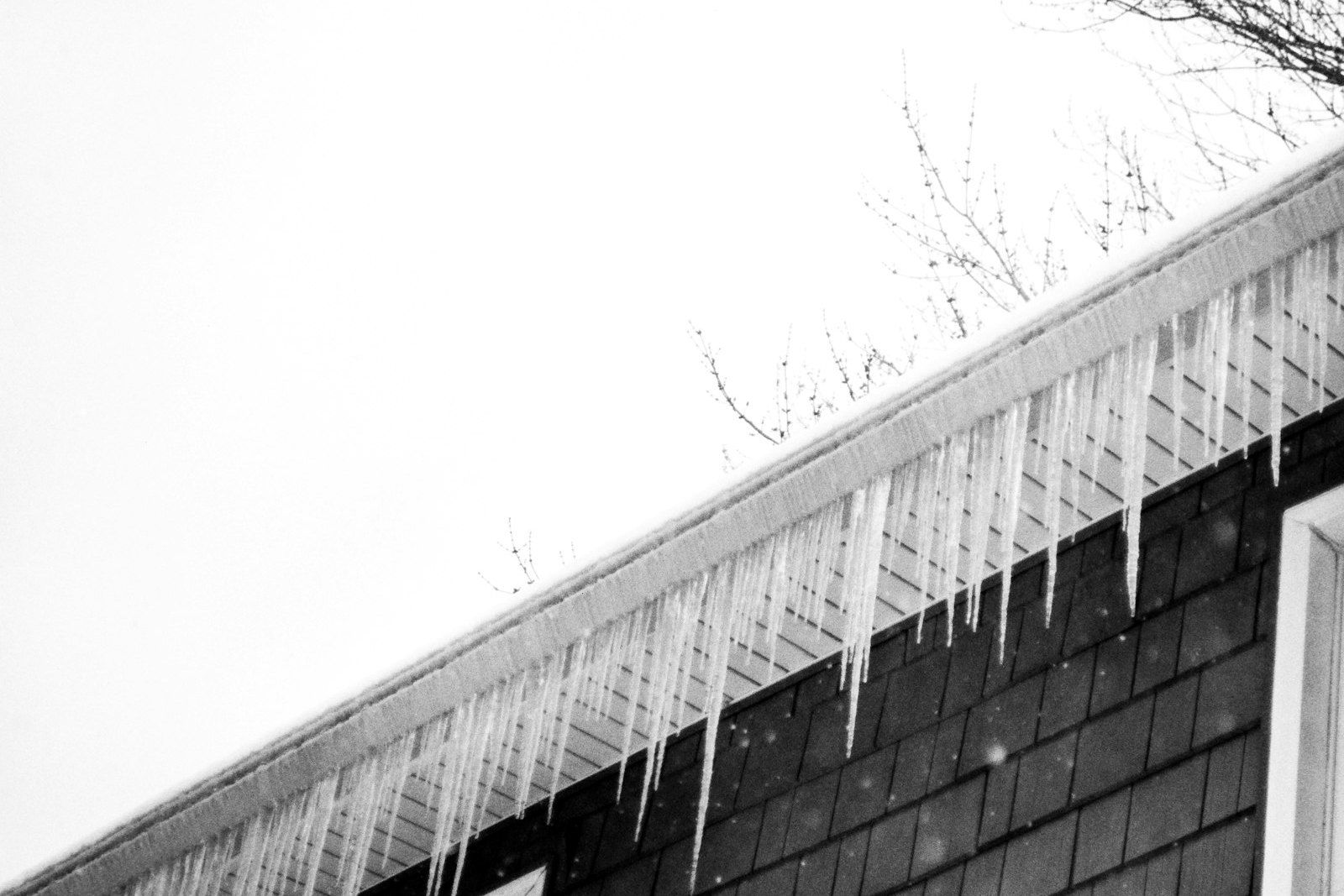
Snow is the usual start. It can sit on Ogden roofs for weeks, and how it melts decides whether it causes trouble. Heat leaking up from the house warms the upper part of the roof and melts the snow from underneath. The water runs down to the eave, which hangs out past the warm house and stays cold, and it freezes there. The ridge of ice that builds up is an ice dam. Water pools behind it, works back up under the shingles, and comes in along the outside walls of the top floor. Long icicles at the gutter line are the sign most people notice.
The older houses near downtown, around Jefferson Avenue and East Central, were built long before modern attic insulation, and heat escapes through their roofs more easily. Many of their ceilings are plaster, which holds water and comes loose from the lath once it has been wet.
Wind is the other cause. Strong east winds come down out of the canyons, and the September 2020 storm knocked out power to tens of thousands of customers along the northern Wasatch Front. Wind like that lifts shingles and drops limbs on roofs, and the damage may not leak until the next rain or the next thaw.
Summer brings fast storms. A thunderstorm can dump a lot of rain in a short time, and the water finds worn flashing around a chimney, a cracked vent boot or a low-slope porch roof.
Some roof leaks go unnoticed for months. A slow drip into attic insulation can run for a whole winter before a stain shows. If you see a new ring on a top-floor ceiling, call before the next storm.
Crews work in Ogden and across Weber County. When you call, say whether water is still coming in, and ask whether the company can tarp the roof on the first visit.