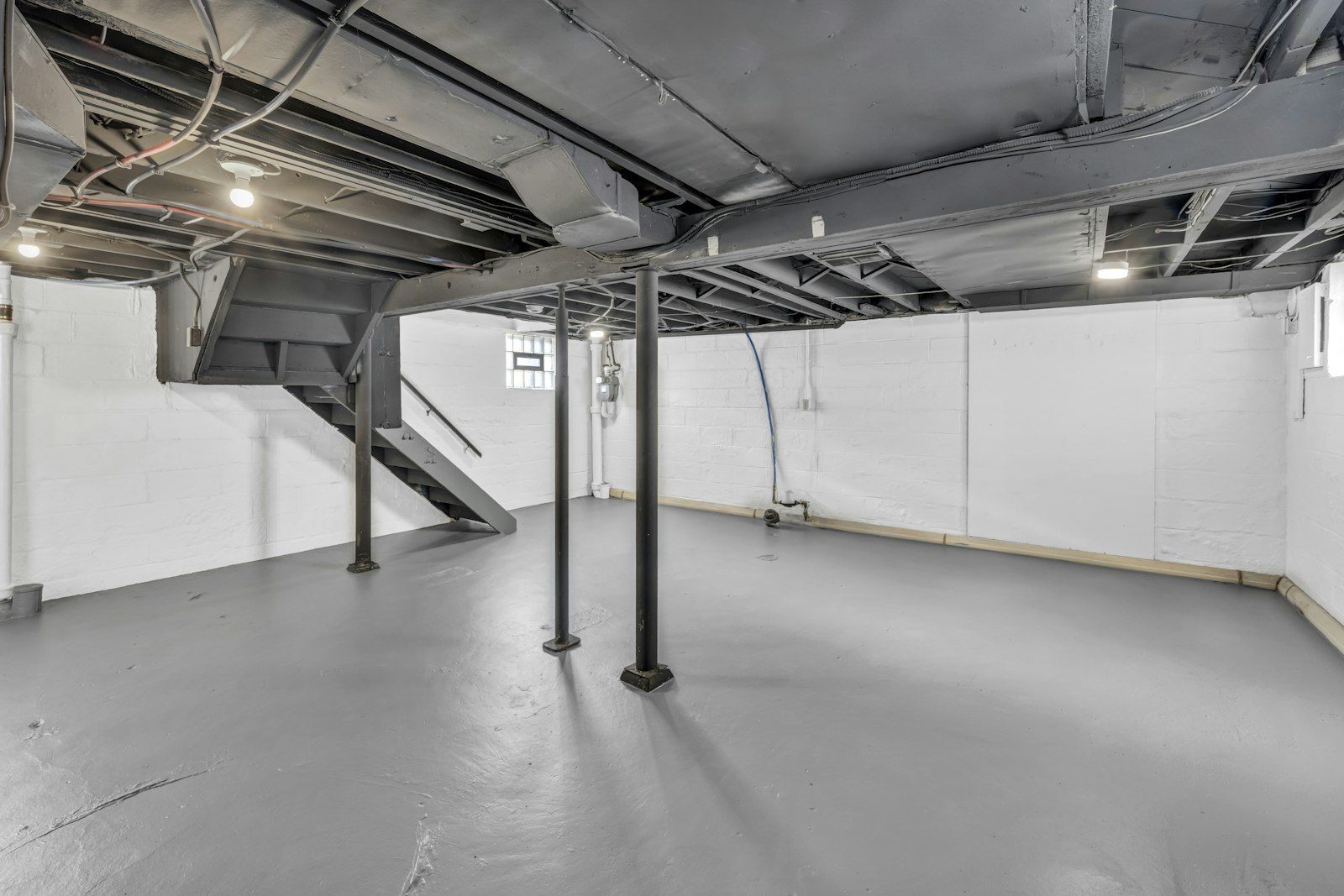
How a basement gets cleaned up
Basements take water from three directions: from above when plumbing leaks, from the floor drain when the sewer line backs up, and through the walls and floor when the ground outside is saturated. The cleanup depends on which one you have, so the crew will want to know what you saw first.
For clean water, the order is pump, extract, remove what cannot be dried, then dry the rest. Finished basements take the most work. Carpet pad comes out. Drywall that wicked water gets cut a foot or two up so air can reach the studs and bottom plate. Insulation behind the drywall usually has to go, too, because wet fiberglass holds water against the framing.
If the water came up the floor drain or from outside, it is treated as contaminated. That means more of the soft materials come out, and the crew cleans and disinfects the slab and lower walls before drying starts.
Things to check right now
- If the water is deep enough to reach outlets, the furnace or the water heater burners, stay out of the basement and call.
- Look at the floor drain. Water bubbling up from it points to the sewer line, so stop running water upstairs.
- Check the window wells. A well full of snowmelt or rain can push water straight through the window.
- If you have a sump pump, see whether it is running and whether the breaker or GFCI outlet it plugs into has tripped.
- Move boxes, furniture and anything on the floor to a dry spot or upstairs.
Why Ogden basements flood
Ogden sits on benches and old lakeshore terraces that step down from the Wasatch toward the valley floor. Homes on the East Bench and the slopes below Mount Ogden get a lot of water moving past them in spring, when the snowpack above town melts and the ground stays wet for weeks. If a yard slopes toward the house, or a downspout empties right next to the foundation, that water finds its way to basement walls.
Window wells are one of the most common entry points we hear about. They fill with snow over the winter, and when a warm stretch or a spring rain hits, the meltwater has nowhere to go but through the basement window.
In older neighborhoods closer to downtown and along Jefferson Avenue, many basements were dug long before modern waterproofing. Stone and early concrete foundations seep during long wet spells, and a lot of those homes have original clay or cast iron sewer laterals that roots have cracked over time. When those lines back up, the floor drain is the first place it shows.
Down in West Ogden and the lower parts of town nearer the Weber River, the ground stays wetter, and heavy runoff years raise the water table. Basements there are more likely to take on groundwater through the floor.
Crews cover all of Ogden plus Roy, Riverdale, South Ogden and North Ogden. When you call, mention whether the basement is finished, since that changes the equipment and crew size.