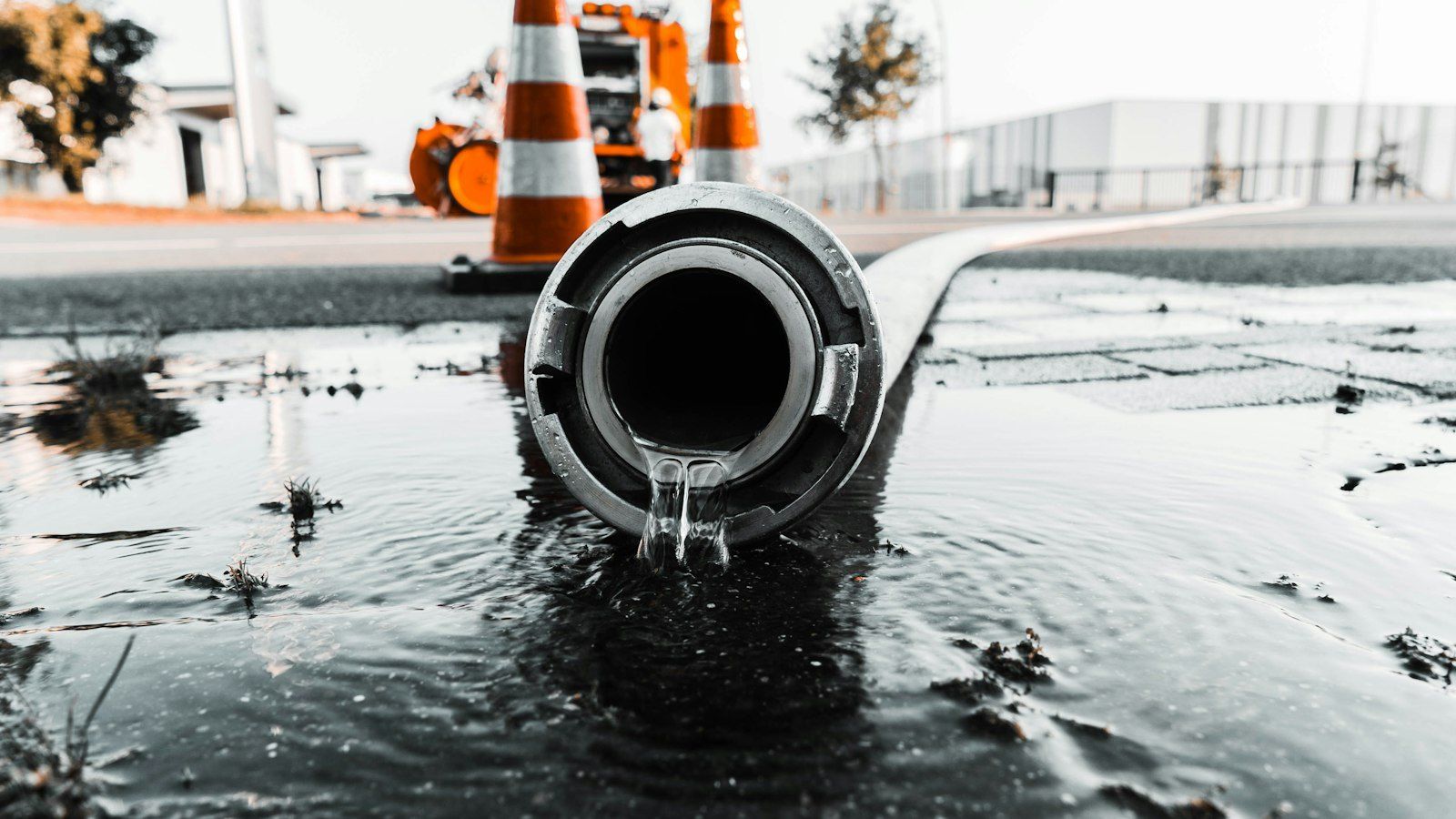
What happens when the crew arrives
The crew's first job is finding the source. If the water is still running, they confirm the shutoff or get a plumber out before anything else.
Next comes the water itself. A submersible pump handles anything deep, like a basement with a few inches across the floor. A truck-mounted or portable extractor goes over carpet and pad, which can hold a surprising amount of water even when the surface feels only damp.
Then they measure. Moisture meters and a thermal camera show how far water traveled under flooring and up into walls, which is usually farther than the stain you can see. Carpet pad that soaked through usually gets cut out and replaced, and drywall that wicked water above the baseboard often gets cut at a set height so the wall cavity can dry.
Before they leave, they set air movers and dehumidifiers and tell you how long the equipment will run and when they will be back to take readings.
While you wait
- Close the main water shutoff if the leak is from plumbing or an appliance. In many Ogden homes it is in the basement or a utility room, on the wall where the line comes in.
- Keep away from outlets, power strips and the breaker panel if water is near them. Turn off breakers to wet rooms only if you can stand somewhere dry to do it.
- Get rugs, electronics, paperwork and family photos up off the floor.
- Photograph the water and the damage before you move or toss anything. Your adjuster will want those pictures.
- Skip the household vacuum. A shop vac is fine for a small clean spill, but not for sewage or water from outside.
Where extraction calls come from in Ogden
Almost every house in Ogden has a basement, and that changes what a leak looks like. Water from a failed supply line or water heater runs downhill, so a leak on the main floor often ends up soaking a finished basement ceiling, then the carpet below it. By the time someone notices, the water is in two rooms on two levels.
Water heaters are a frequent source. The water along the Wasatch Front runs hard, and the minerals settle as sediment in the bottom of the tank. That buildup makes tanks work harder and can shorten their life, and a tank that finally rusts through can empty 40 or 50 gallons onto a basement floor before anyone hears it.
In the older homes around Jefferson Avenue, East Central and the blocks near downtown, the plumbing has often been patched many times over the decades. Galvanized lines corrode from the inside, and a joint that gives way behind a wall can run for hours. Newer homes on the East Bench and up toward Mount Ogden have more plastic lines, ice maker hookups and upstairs laundry rooms, and the usual calls there are washer hoses and fridge lines.
Crews dispatch across Ogden's 84401, 84403, 84404 and 84405 ZIP codes and into North Ogden, South Ogden, Riverdale and Roy. Tell the person on the line how deep the water is and whether it is still coming in, so the right equipment shows up on the first trip.