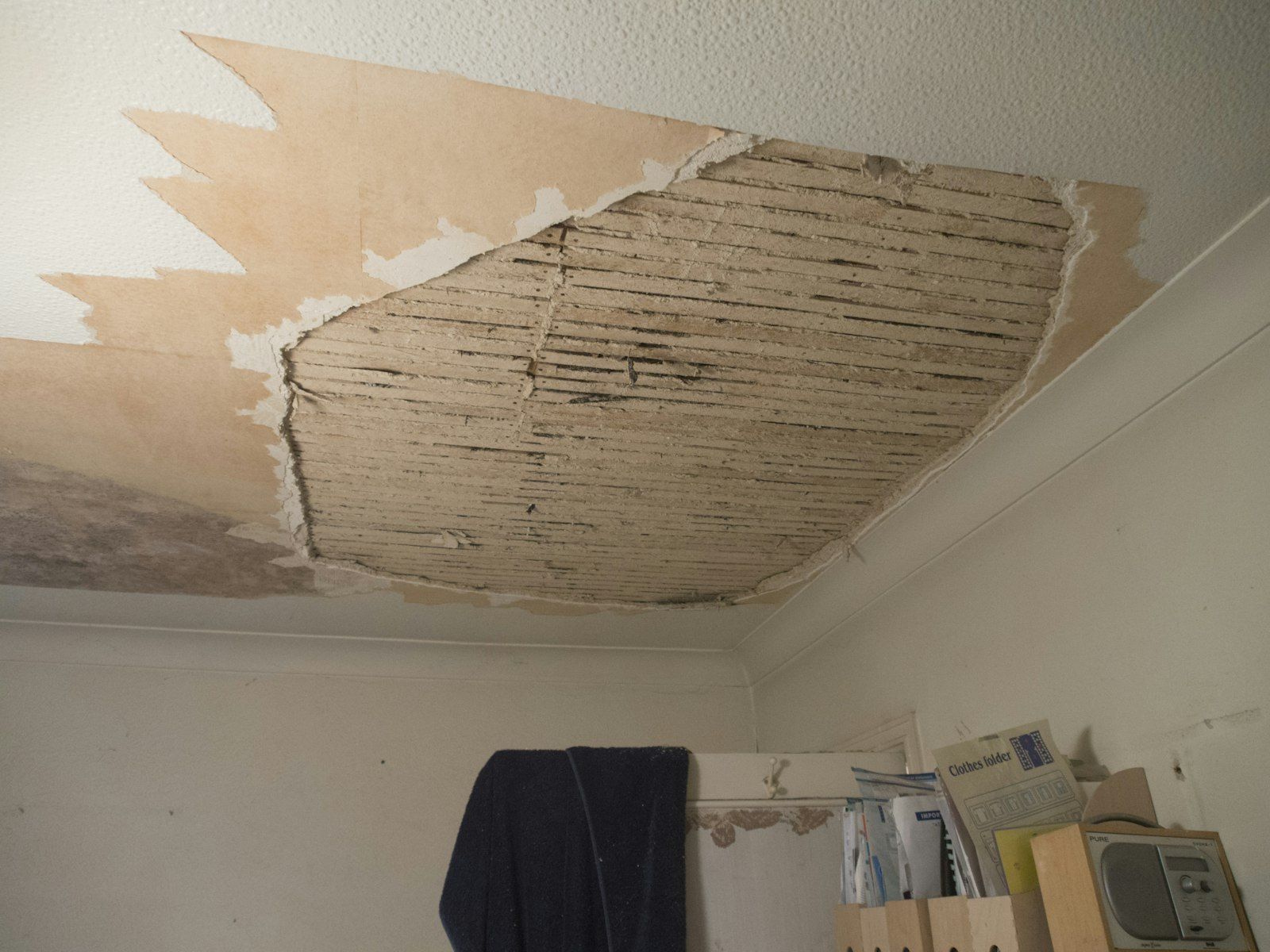
What to do in the first ten minutes
- Shut off the main water valve. Do this first, even before you call. If you cannot find it or it will not turn, the meter shutoff near the street is the fallback, but it usually takes a special meter wrench.
- Open a faucet on the lowest floor to drain what is left in the lines.
- Turn off power to any room where water is dripping through light fixtures or running down walls near outlets.
- Call, and say it is a burst pipe so the company knows water may be inside ceilings and walls.
- Take photos before you start moving things.
If water is coming through a ceiling and the drywall is sagging, poke a small hole at the lowest point with a screwdriver and let it drain into a bucket. A ceiling that holds water can come down all at once.
Why burst pipe damage is often worse than it looks
A frozen pipe splits while it is frozen, but it does not leak until it thaws. That is why so many breaks show up on the first warm afternoon after a cold snap, often while people are at work.
Pipes that freeze tend to sit in exterior walls, crawlspaces, garages and the floor over an unheated space. When they break, the water spreads inside the wall or ceiling cavity before it shows. A crew opens enough of the ceiling or wall to reach the wet framing and insulation, then dries the cavity with air movers and dehumidifiers. Closing it up while it is still wet traps the moisture and invites mold.
Freeze damage in Ogden homes
Ogden sits around 4,300 feet, and winter nights below freezing are routine from late fall into early spring. Cold air also drains down out of the canyons at night, and the coldest snaps can push temperatures into the single digits or lower. Pipes that make it through an ordinary winter can still freeze when one of those stretches settles in for a few days.
The pipe that breaks most often is the outdoor spigot. Many Utah homes have frost-free hose bibs, where the valve sits inside the wall so the pipe drains when you shut it off. If a hose is left attached, water stays trapped in the pipe, and when it freezes the split happens inside the wall. Nobody sees it until the spigot gets turned on in spring and water runs into the basement ceiling.
Older homes in the 25th Street area, Jefferson and East Central often have plumbing in exterior walls with little insulation, plus additions over crawlspaces. Houses on the East Bench catch more wind, and a draft through a rim joist or an attic bypass can freeze a line that has been fine for years. Cabins and second homes up Ogden Canyon and in the upper valley see breaks when the heat fails while nobody is there.
Lawn sprinkler lines are their own problem. If the lines were not blown out in the fall, the backflow preventer and the valves near the house can crack, and some of those sit right against the foundation. Our winterizing guide covers how to avoid that.