What a crew does with a wet ceiling
A stain on the ceiling shows where the water ended up. The leak itself is often several feet away, because water runs along joists and pipes until it finds a seam or a light fixture to drip through. The crew traces it back with a moisture meter and a thermal camera, and they confirm the water is off.
If the drywall is holding water, they drain it on purpose. A small hole at the low point lets the water out into a bucket, and that beats a full sheet letting go over your couch. Then they cut out the drywall that has gone soft or swollen and pull any wet insulation lying on top of it.
With the cavity open, air movers and a dehumidifier dry the joists and the subfloor above. The crew checks readings over the next few days and leaves the ceiling open until the wood is dry. Patching, texture and paint come last.
Until someone gets there
- Shut off the water if the leak is from plumbing. If you are not sure, shut off the main anyway.
- Flip the breaker for any light or fan the water is dripping through. Leave the wall switch alone if your hands are wet.
- Stay out from under a ceiling that bulges. Move furniture and rugs out of the room, or cover them with plastic.
- Set buckets under the drips and lay towels around them.
- Take photos of the stain, the sag and anything that got wet below.
Ceiling leaks in Ogden homes
Most Ogden houses have a basement, so most have at least one ceiling with plumbing right above it. A main-floor bathroom, a kitchen sink or a laundry hookup leaks, and the first sign is a brown ring on the basement ceiling. In a finished basement that ceiling is drywall, sometimes with can lights and ductwork packed in beside the pipes, and water can spread across a wide area before a single drop falls.
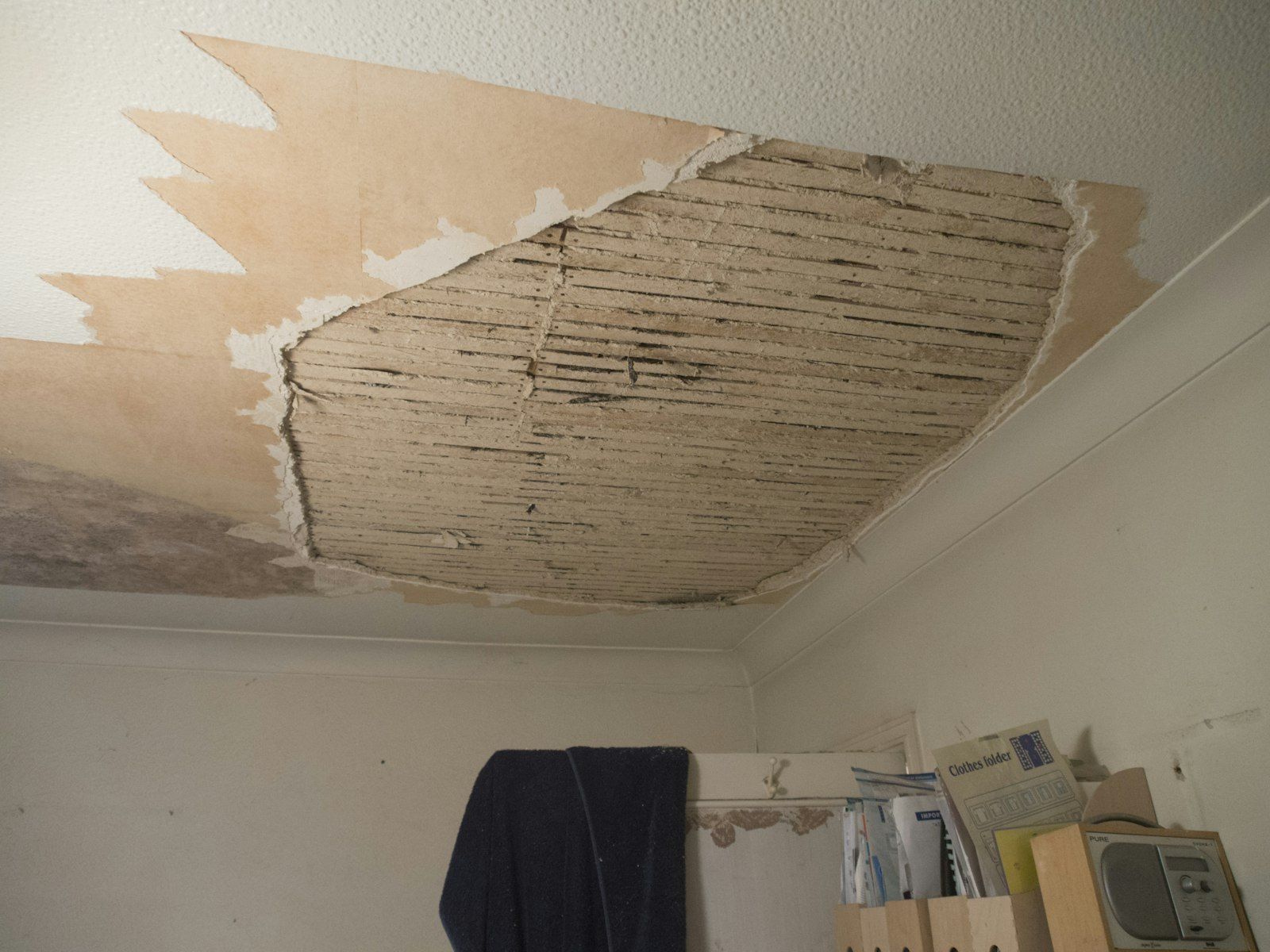
The older homes around Jefferson Avenue, East Central and the blocks near Historic 25th Street are a different job. Many still have plaster on wood lath. Plaster soaks up water slowly and gets heavy, and once it lets go of the lath it falls in slabs. A crew may be able to dry a plaster ceiling in place if the water stopped early. If it has started to sag or crack in a ring, they take down the loose section before it lands on someone.
Newer two-story homes on the upper East Bench and in the towns north of Ogden often have a laundry room and bathrooms upstairs. A split washer hose or a toilet supply line up there sends water through the main-floor ceiling, and it tends to come out at recessed lights, smoke detectors and the seams between drywall sheets.
Winter adds its own causes. A pipe that froze in a ceiling over a garage or along an outside wall splits, then leaks when it thaws. The frost-free spigot is the classic one. A hose left on over the winter cracks the pipe inside the wall, and the leak shows up in the basement ceiling the first time someone waters the lawn in spring. After a big snow, ice at the roof edge can also back meltwater up under the shingles and stain the ceiling of a top-floor room along the outside wall.
Crews cover all of Ogden's ZIP codes and the towns around it. When you call, say which floor the ceiling is on and what sits above it. That tells the company whether to expect a plumbing leak, a roof leak or a frozen line.