Which floors can be dried and which come up
Solid hardwood gives a crew the most to work with. Wood swells when it takes on water and shrinks back as it dries, so boards that cupped at the edges will often flatten out if drying starts within a day or two. Crews lay mats on the floor and hook them to a vacuum pump that pulls moisture up through the boards. A dehumidifier runs in the room, and sometimes air movers run under the floor from the basement.
Laminate goes the other way. The fiberboard under the printed surface swells and stays swollen, so wet laminate almost always gets replaced. Engineered wood falls in between and depends on how long it sat. Sheet vinyl and vinyl plank do not soak up water themselves, but they trap it against the subfloor, so the crew lifts enough to see what is underneath.
The subfloor decides a lot. Plywood dries well. Particleboard underlayment, common under older vinyl and carpet, turns soft and crumbles once it has been soaked. The crew takes readings on the floor and from below, then tells you what they think they can save.
What helps before the crew arrives
- Stop the water at the source or the main shutoff.
- Mop or towel up standing water. A wet vacuum works on hard floors if the outlet you plug into is dry.
- Pick up rugs and move furniture off the wet area. Furniture stain and rug dye both bleed into damp flooring.
- Leave the heat or air conditioning at its normal setting. Keep space heaters away from the boards, because fast, uneven heat makes them crack.
- Take photos of the floor and of the ceiling in the room below.
Wet floors in Ogden houses
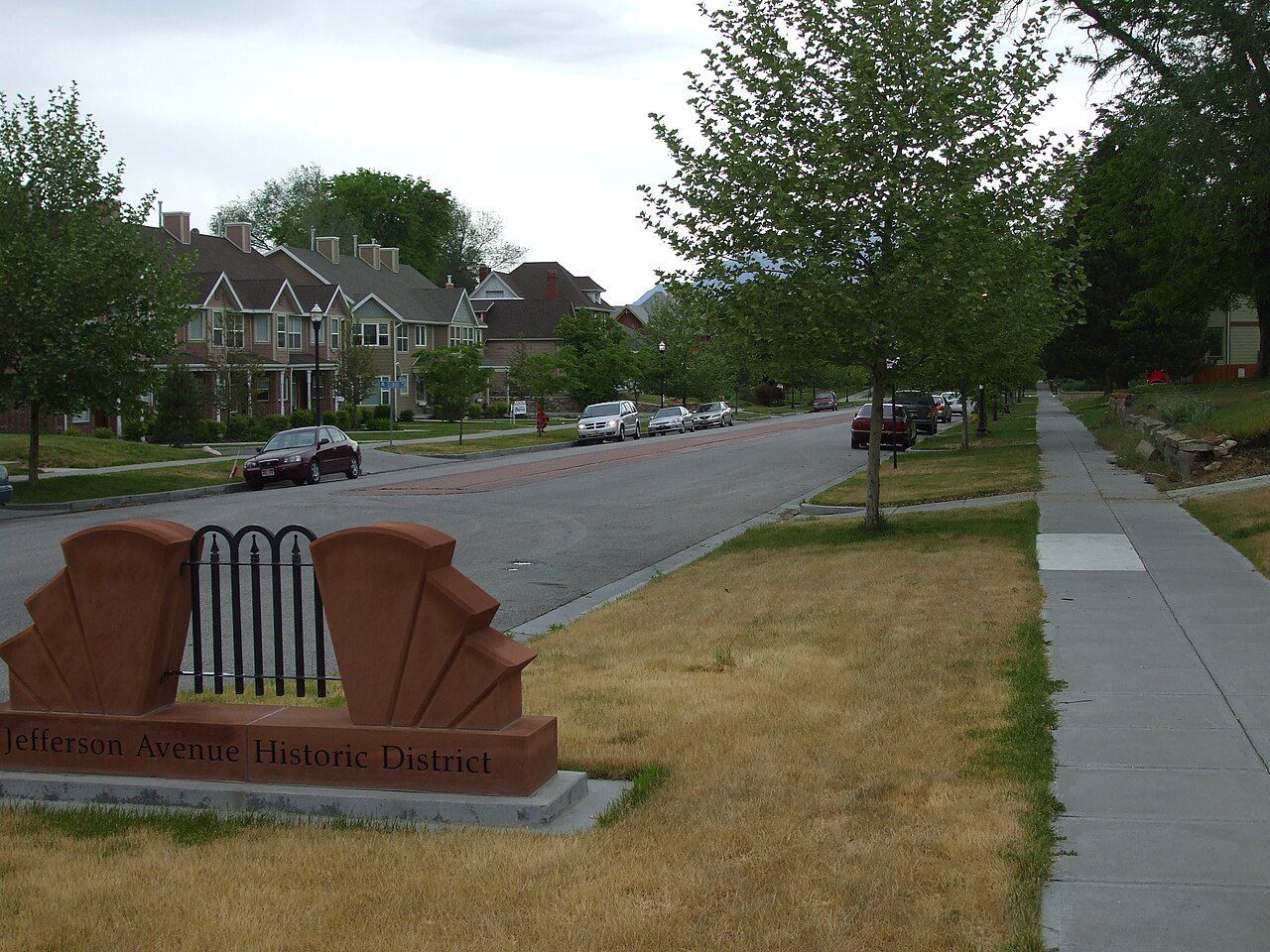
The houses with the most hardwood are the old ones. Victorian and early 1900s homes around Jefferson Avenue, East Central and the blocks near Historic 25th Street have original wood floors, and many of those floors are still in use. They can usually be saved when a crew gets drying mats down quickly.
In most Ogden homes the main floor sits over a basement, and that cuts both ways. Water that gets through the boards drains into the basement ceiling, so one leak can turn into two wet floors and a wet ceiling. A basement also lets a crew reach the underside of the subfloor and dry the floor from both sides.
The usual sources are in the kitchen and the bathrooms. A dishwasher or ice maker line leaks slowly under a cabinet, and the first clue is a dark seam or a raised edge a few feet out into the room. A toilet supply line or a tub overflow soaks the bathroom floor and runs under the wall into the hallway. Hard water plays a part. Minerals build up in valves and fittings, and old shutoffs under sinks seize or start to drip.
Basement floors are a separate case. Carpet over pad on a concrete slab is common downstairs, and after a water heater leak or a floor drain backup the pad comes out and the slab gets dried before anything new goes down. Laminate and vinyl plank in a finished basement trap water against the concrete, and a musty smell shows up weeks later if nobody lifts them.
Utah's dry air will dry the top of a board fast. The underside and the subfloor take much longer, which is why a floor that looked fine in the first week can cup or lift later. If that is happening at your house, a second set of moisture readings is worth the call. Crews take them across Ogden and the nearby towns.